My First Speech to Full Council This Term
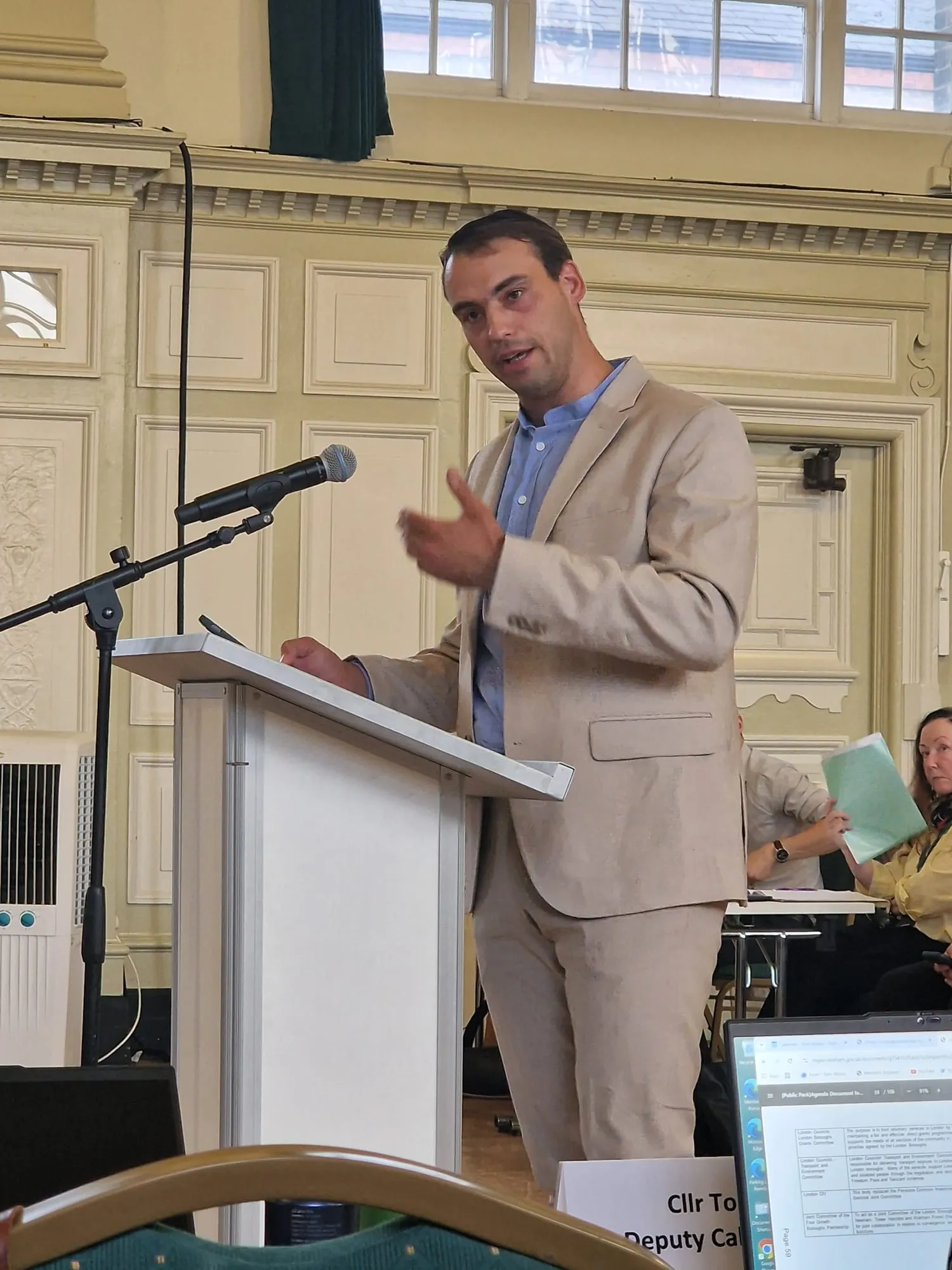
On Monday, I gave my first speech to full council this term, and I’d been sitting on it for longer than I’d have liked. I’d originally put in to speak before the incident at Green Street, where several people ended up in hospital. By the time Monday came round, that incident had been followed by a car crashing into a corner shop on Portway, an eight-year-old hit by a car on School Street in Forest Gate during school street hours, and a motorcyclist hit on Green Street, all within the space of a couple of weeks. I also hadn’t forgotten that two years ago, a young woman lost her life on Barking Road in Greengate when a driver lost control of their vehicle.
So I opened with that run of incidents, one after another, because I wanted the chamber to feel how relentless it had become rather than let it land as a single, isolated tragedy. Four people die on our roads every day. Someone is killed or injured every eighteen minutes. Sixteen hundred people killed and twenty-eight thousand seriously injured every year. I said plainly that this has become endemic, and that it has been normalised, and that we would never accept numbers like that for any other part of public life. We shouldn’t accept them on our streets either.
I made a point of saying these aren’t statistics. They’re people, with families, friends, futures, all of it. It’s easy for that to become a throwaway line in a speech, but I meant it as the whole foundation of what I said next.
From there I talked about why I think the Government’s Road Safety Strategy and the Mayor of London’s Vision Zero Action Plan matter, because they’re both built on the same idea: the Safe System approach. That we stop treating road deaths as an acceptable cost of getting around, and stop putting the blame on individual drivers who, being human, will always make mistakes. Human error is inevitable. Death and serious injury shouldn’t be. That means designing our streets, setting speed limits, regulating vehicles and shaping enforcement so that a moment’s mistake doesn’t have to cost someone their life.
I said the Road Safety Strategy, the first since 2015, is a response to a lost decade in which the UK went from leading Europe on road safety to falling behind, and that it’s aiming for a 65% reduction in people killed or seriously injured by 2035. But it was the Vision Zero Action Plan I spent longest on, because I said, and I still believe it, that it’s a big part of why Sadiq Khan is my political hero. Zero people killed or seriously injured on London’s roads by 2041 is a genuinely bold target, and I ran through some of what’s meant to get us there: 20mph as the default speed limit, two hundred more School Streets, a thousand new crossings, more Low Traffic Neighbourhoods. I also pointed out that this complements work Newham is already doing, the new crossing on Water Lane, Healthy School Streets, bus priority routes, and the wider healthy streets work on the Royal Docks Corridor and Romford Road, and I mentioned, briefly, that this is exactly the kind of area, including stretches like Silvertown Way and Peto Street North, where speeding is something residents raise with me often.
I also spent time on something I think gets missed in these conversations, the danger posed by SUVs specifically. Both the Strategy and the Action Plan highlight it: pedestrians and cyclists are 14% more likely to be killed in a collision with an SUV than with a smaller car, and for children that rises to 77% more likely, climbing to 209% for children under nine. Those are numbers that deserve more attention than they get.
I closed by putting it directly to the chamber. Both the Action Plan and the Strategy are a challenge, laid down by the Labour government and the Mayor, to actually deliver on this. My question to my fellow councillors was whether Newham is going to rise to that challenge, and I called on the council to set its own Vision Zero target.
That’s what I wanted my first speech of the term to do: not just note that road danger is a problem, but insist that it’s an urgent one, and that this council has a role in fixing it, not just watching London and Westminster set targets from a distance.